Every athlete who has gone through the recruiting process knows the frustration: you fill out a questionnaire, upload a highlight reel, and then nothing happens. Coaches aren't reaching out. Programs aren't expressing interest. Your profile feels like a message in a bottle dropped into the ocean.
The problem, almost universally, is not the athlete — it's the profile. Most recruiting profiles are missing the information coaches actually need to make a decision, and they're presented in a format that makes it hard to act on what's there.
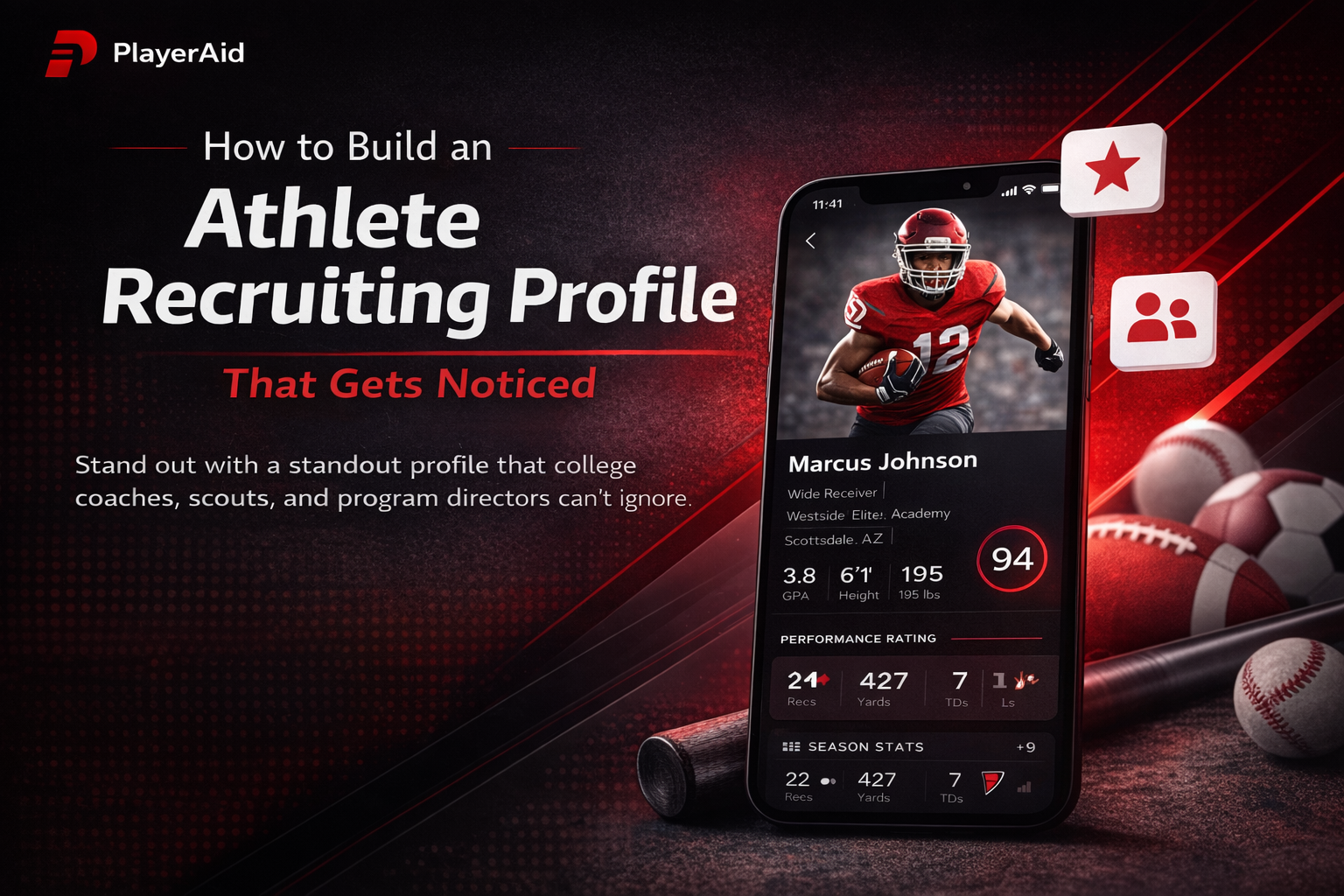
This guide breaks down exactly what a high-converting athlete profile looks like, what data points matter most by sport, and how to structure your story so that the right programs find you and immediately understand your value.
Why Most Profiles Fail
College coaches at competitive programs review hundreds — sometimes thousands — of profile submissions each year. They're making split-second decisions about who to look at more closely and who to pass on.
The profiles that get passed over almost always share the same problems:
- Missing or outdated stats. A lacrosse player listing their sophomore stats as a senior. A basketball player whose profile has no statistics at all — just a highlight reel.
- No context for the numbers. A 4.6 forty-yard dash means something very different for a 165-pound wide receiver than for a 230-pound linebacker. Raw numbers without physical context are nearly meaningless.
- A highlight reel that doesn't tell a story. Clips that show only the best plays with no sense of the player's role, IQ, or consistency.
- No academic information. Most coaches are evaluating athletic and academic fit simultaneously. Leaving GPA and test scores off your profile immediately creates an information gap.
- Generic descriptions. "Hard-working, coachable team player" describes every athlete who has ever played organized sports. It tells a coach nothing.
The athletes who generate real recruiting attention do the opposite of all of this.
The Five Pillars of a Standout Profile
1. Complete and Current Athletic Data
Your profile should read like a scouting report, not a resume. That means current, verifiable statistics organized by season, with clear context for each number.
What coaches want to see:
- Physical measurements: Height, weight, wingspan (for basketball), hand size (for football quarterbacks), standing vertical, max vertical
- Speed and agility metrics: 40-yard dash, shuttle time, vertical jump, broad jump — with dates so coaches know how current the data is
- Position-specific statistics: Points, assists, rebounds per game in basketball. Batting average, OBP, exit velocity in baseball. Goals, assists, shots on goal in soccer. These should be listed by season and level (varsity, club, AAU)
- Team context: Your team's record, level of competition, and where you ranked among your peers matters enormously. Being the leading scorer on a 5-win team is different from being the second-leading scorer on a state finalist.
Update your stats every season. Outdated profiles signal to coaches that you aren't serious about the process.
2. Performance Video That Coaches Actually Want to Watch
The highlight reel is where most athletes over-invest their time and under-invest their thinking.
Coaches want to see the following, roughly in this order:
- Skills in context. Not just the spectacular play, but the plays that show decision-making, positioning, and basketball IQ (or sport-specific IQ). A shortstop who makes the routine play look easy impresses more than one who makes three diving stops and boots two grounders.
- Work against quality competition. Label each clip with the opponent, date, and level of play. Coaches discount clips from blowout games against weak competition.
- Your role in the offense or defense. Don't just show the moments you touched the ball. Show coaches that you understand the game — how you move without it, how you set screens, how you communicate.
- Film, not just highlights. For most sports at the D1 and D2 level, coaches want access to full game film, not just a curated reel. Make it easy for them to watch a full game.
Keep your primary highlight reel to 3–5 minutes. Lead with your three or four best clips. Label every clip.
3. Academic and Character Profile
Athletics is the entry point — academics is what gets you through the door.
Your profile should prominently feature:
- Current GPA (weighted and unweighted)
- SAT/ACT scores if taken
- Class rank if applicable
- Intended major or areas of academic interest
- Any academic honors, AP or IB coursework
Beyond the numbers, give coaches a sense of who you are. What do you do when you're not playing? What leadership roles have you taken on — team captain, student government, volunteer work? What matters to you outside of sport?
The coaches who build programs that last are looking for character as much as talent. Give them material to work with.
4. Social Proof and Verification
A profile that can be verified is dramatically more trustworthy than one that can't.
This means:
- Linking to official statistics from your school, club, or league where possible
- Including verifiable references — your high school coach's contact information, club director, AAU coach
- Consistent social media presence if you maintain one. A clean, sport-focused Instagram or Twitter profile that shows you competing and developing is a positive signal. A profile full of off-field content that doesn't reflect the character you're projecting on your recruiting profile is a red flag.
The QR player card that PlayerAID generates is specifically designed for this — it lets coaches pull up your profile instantly, see updated stats and video, and share your information with other coaches on their staff with a single scan.
5. Your Recruiting Targets and Timeline
A profile that clearly communicates your goals and timeline is significantly easier for coaches to act on.
Include:
- Graduation year
- Division and program preferences (D1, D2, D3, NAIA, JUCO)
- Geographic preferences if you have them
- Whether you're open to official or unofficial visits and when you're available
Don't be afraid to be specific. "I'm targeting mid-major D1 programs in the Southeast with strong business programs" tells a coach immediately whether it's worth their time to reach out. Vague profiles require coaches to do extra work — and most won't.
Timing and the Recruiting Calendar
Understanding the recruiting calendar for your sport is as important as having a great profile.
For most NCAA sports, the key windows are:
- Freshman/Sophomore year: Focus on building your profile and getting film together. Attend camps and showcase events. Begin identifying target schools.
- Junior year: Start reaching out to coaches directly. Your profile should be complete and current. Attend ID camps at your target schools.
- Summer before senior year: This is the most active recruiting period for most sports. Coaches make scholarship decisions. If you haven't heard from your target schools, it's time to expand your list and be aggressive.
Many athletes wait too long. A profile that's complete junior year is in play for the entire junior year evaluation period. A profile finished senior year often misses the window entirely.
Making Your Profile Work for You
A recruiting profile isn't a one-and-done submission. It's a living document that should evolve with you.
The athletes who get the best results treat their profile like a professional portfolio — updating it after every significant competition, adding new film regularly, and monitoring which programs are engaging with their information.
With PlayerAID, you can see when coaches view your profile, what sections they spent time on, and which programs have shared your information internally. That data tells you where to focus your outreach and which relationships are worth investing in.
The difference between an athlete who gets recruited and one who doesn't is rarely talent. It's information — who has it, how current it is, and how easy it is to act on. Build a profile that makes that decision easy for the coaches who matter.
PlayerAID is the athlete intelligence platform connecting players to real opportunity. Build your complete athlete profile, get discovered by programs that match your abilities, and manage your entire recruiting journey from one place.
Related Articles